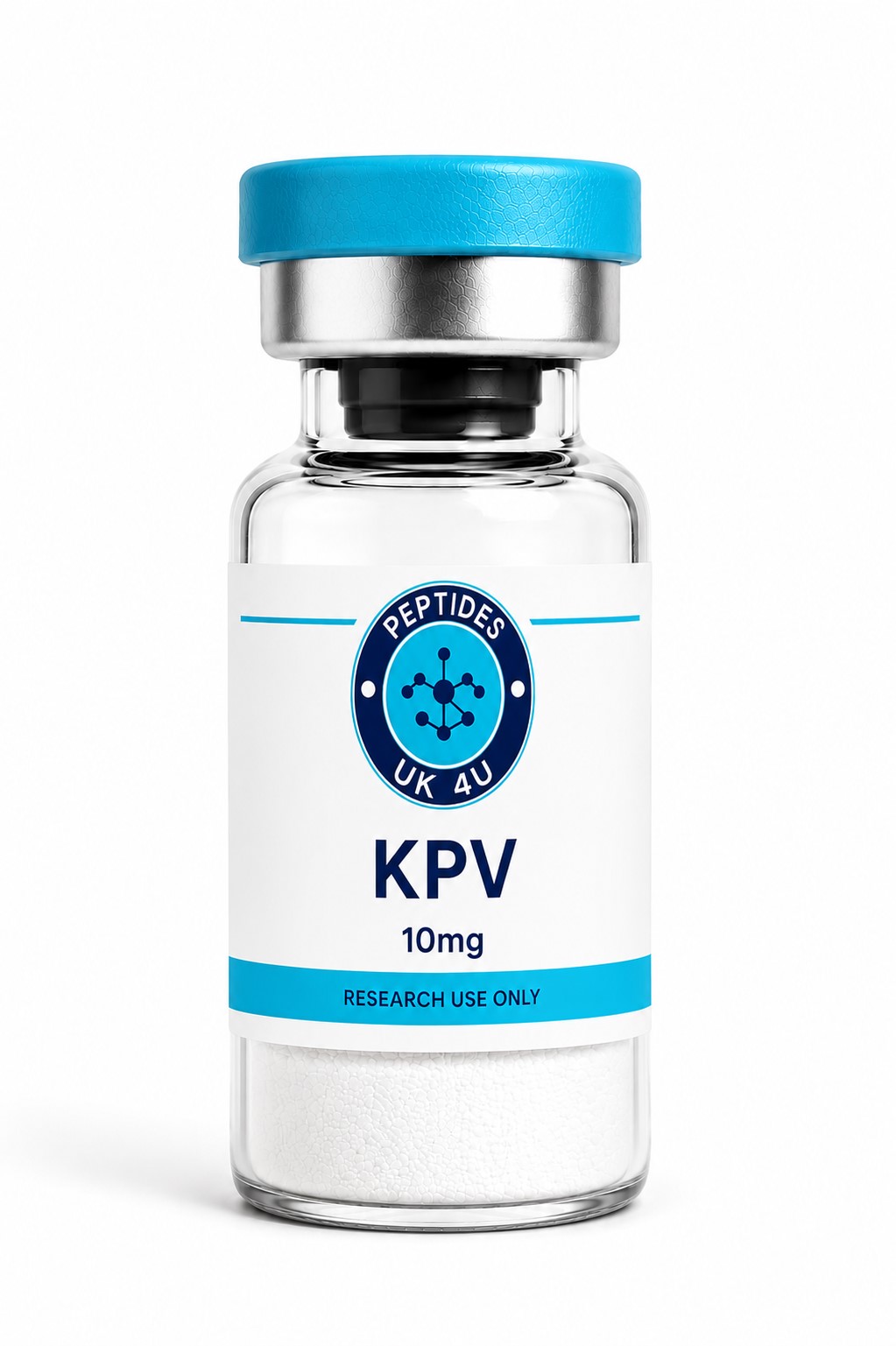
KPV 10mg
Synthetic tripeptide fragment (Lysine–Proline–Valine), lyophilised powder (10mg, 99%+ purity) for laboratory research into peptide signalling and regulatory pathway interaction.
Best value and fastest option — supplied as a lyophilised vial, shipped within 48 hours of ordering. Use our calculator for your target concentration.
For In Vitro Use Only — Not for Human Use
Every batch is independently HPLC & mass-spec tested. Certificate of Analysis is batch-numbered and matched to the vial you receive.
Overview
KPV 10mg is a synthetic peptide fragment supplied as a lyophilised powder for laboratory research use. It is selected within controlled environments for investigation into peptide structure, receptor interaction, and signalling pathways.
Research
Within laboratory settings, KPV (Lysine–Proline–Valine) is studied for its interaction with cellular signalling pathways and peptide-mediated biological processes. Research applications commonly focus on peptide stability, receptor activity, immune-related pathway modelling, and gastrointestinal research under controlled experimental conditions. KPV is a naturally occurring fragment derived from alpha-melanocyte-stimulating hormone (α-MSH) and is frequently investigated in peptide research relating to cellular communication and regulatory pathway interaction.